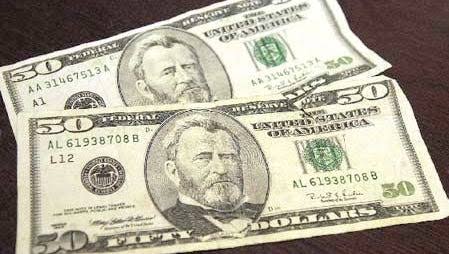
Have you ever received a $50 bill and wondered whether it was real or counterfeit? Knowing how to tell if a fifty dollar bill is fake can help protect your money, prevent financial losses, and give you confidence when handling cash. Counterfeit currency can sometimes look surprisingly convincing, but genuine U.S. $50 bills contain several important security features that are difficult to reproduce accurately.
Whether you are a business owner, cashier, shopkeeper, or everyday consumer, learning how to identify a fake $50 bill is a valuable skill. From checking the security thread to examining the watermark and color-shifting ink, a few simple steps can help you recognize suspicious banknotes.
1. Check the Security Thread
One of the easiest ways to identify a genuine $50 bill is by examining its security thread. Hold the banknote up to a light source. You should see a thin, embedded security strip running vertically to the right of the portrait.
On genuine $50 bills, the thread contains the text “USA 50” and is positioned inside the paper rather than printed on its surface. Under ultraviolet (UV) light, this security thread glows yellow.
If the strip is missing, appears printed on the surface, or does not glow yellow under UV light, the bill deserves closer inspection.
2. Look for the Watermark
Another important way to tell if a fifty dollar bill is real is to check its watermark. Hold the bill against the light and look for a faint image of Ulysses S. Grant on the right side of the portrait.
The watermark should be visible from both sides of the genuine note. It is created during the paper-making process, not simply printed onto the bill.
A missing, unclear, or poorly reproduced watermark may indicate counterfeit currency.https://moneythriving.com/
3. Examine the Color-Shifting Ink
Modern-design $50 bills feature color-shifting ink on the numeral 50 in the lower-right corner on the front.
Tilt the banknote back and forth. The numeral should change color from copper to green.
This feature is particularly useful when checking suspicious cash because ordinary color printers cannot easily reproduce the same effect. If the number remains one color regardless of the viewing angle, inspect the bill more carefully.
4. Inspect the Portrait of Ulysses S. Grant
The portrait of Ulysses S. Grant is another useful security detail. On a genuine $50 bill, the image should appear sharp, detailed, and professionally printed.
Look closely at the facial features, clothing, surrounding patterns, and fine lines. Genuine currency uses detailed engraving techniques that produce crisp images.
Counterfeit bills may have blurry portraits, uneven printing, smudged details, or unusually flat-looking images.
5. Feel the Texture of the Paper
Real U.S. currency does not feel like ordinary printer paper. Genuine banknotes are made from a distinctive blend of 75% cotton and 25% linen.
The paper has a firm, slightly textured feel, and the raised printing can often be felt around the portrait, lettering, and other printed areas.
A suspicious $50 bill may feel unusually smooth, thin, thick, or similar to standard office paper. However, texture alone cannot confirm whether a banknote is genuine.
6. Check the Fine Printing and Microprinting
Genuine $50 bills contain tiny printed details that are difficult for counterfeiters to reproduce.
Use a magnifying glass to inspect the fine lettering around the portrait and other design elements. Look for clear, sharp microprinting rather than blurred lines or unreadable text.
On newer-design $50 notes, microprinting appears in areas including the collar, stars, and borders.
If these tiny details look like smudges or solid lines, the bill may be suspicious.
7. Compare the Serial Numbers
Every genuine U.S. $50 bill has two serial numbers printed on its front. These numbers should match exactly.
Check that both serial numbers have consistent spacing, alignment, and color. Also look for any signs of alteration, unusual printing, or mismatched characters.
Although counterfeiters can copy serial numbers, inconsistencies between the two numbers can be a warning sign.
8. Examine the Blue and Red Security Fibers
Genuine U.S. currency paper contains small red and blue security fibers embedded throughout the paper.
Look carefully at the surface of the banknote. These fibers should appear randomly distributed and integrated into the paper rather than simply printed on top.
A counterfeit bill may imitate these fibers using colored ink or printed markings. Remember that this feature should be considered alongside other security checks.
9. Check the Borders and Overall Printing Quality
Take a moment to inspect the edges, borders, lettering, and background patterns.
Authentic $50 bills have clear, evenly printed borders and consistent design details. The lettering should be sharp, and the overall appearance should not contain obvious spelling mistakes, blurry images, or irregular ink patterns.
Uneven margins or poor-quality printing can be warning signs, although worn genuine currency may also have imperfections.
10. Use a Counterfeit Detection Method Carefully
Counterfeit detection pens are commonly used by cashiers and retail businesses. These pens react differently depending on the paper composition.
However, counterfeit detection pens are not completely reliable. Some fake bills can pass the test, while genuine older notes or contaminated banknotes may produce misleading results.
For better protection, combine visual inspection, touch, UV light, and comparison with a genuine $50 bill.
What Should You Do If You Receive a Fake $50 Bill?
If you suspect that a fifty dollar bill is counterfeit, do not knowingly spend it or pass it to another person.
Instead:
- Handle the banknote as little as possible.
- Keep it separate from genuine currency.
- Record details about where and when you received it, if known.
- Contact your local law enforcement agency or appropriate financial authorities.
- Follow their instructions for submitting the suspected counterfeit note.
In the United States, suspected counterfeit currency can also be reported to the U.S. Secret Service or presented to appropriate law enforcement authorities.
Final Thoughts: Protect Yourself by Knowing the Security Features
Learning how to tell if a fifty dollar bill is fake does not require expensive equipment or professional training. Simple checks, such as examining the security thread, watermark, color-shifting ink, paper texture, and microprinting, can help you recognize suspicious currency.
The most important rule is to check multiple security features rather than relying on just one. A counterfeit bill may imitate certain details, but reproducing all the security features of genuine U.S. currency is much more difficult.
Stay alert, inspect unfamiliar banknotes carefully, and never ignore suspicious signs. A few seconds of checking can help protect your cash and prevent unnecessary financial losses.
